Article
Unreal Unconferences
What is an unconference?
An unconference is a conference-like gathering whose organization excludes or avoids one or more aspects of a traditional conference, such as a formal program before the event. The many BarCamps conducted around the world are good examples of successful unconferences.
In many ways, an unconference is easier to run than a traditional conference. Some say the “un” refers to unorganized, but be assured, there’s still a lot to do!
Why run an unconference?
There are already user group meetings and there are plenty of conferences, so why run another event?
User groups are a small group of people that listen to a talk or two and have a beer before heading home. Conferences have a couple of hundred people that listen to 20 or more talks, have a bevy each night, and then head home.
Conferences have a low impact on attendees, who might find only 10% of the talks of much value. User groups, conversely, tend to have a high impact on attendees; with only two talks taking place the attendees will likely be interested in at least one of them (to be motivated to attend), hence a 50% success rate.
For networking opportunities, conferences offer greater scope; it’s often impossible to talk to everyone during a conference. User groups, on the other hand, are usually limited for networking as 80% of attendees are typically regulars.
The mix of speakers for user groups comprise the new and experienced, with talks being interactive and audience participation high. Conferences have mostly experienced speakers and talks are typically less interactive, with a couple of questions at the end of the presentation.
User groups are about the sharing of knowledge, experience, and ideas between people. Conferences are about bestowing knowledge, experience, and ideas upon the audience.
User group attendees are active. Conference attendees are passive.
So where’s the middle ground? Let’s say you need an event where you can meet everyone, but still expect to see a fair few new faces. You want more than two talks and you want to have a say in what those talks are. You’re after active participation and interaction, where those who typically stay silent at conferences feel encouraged to join in. You want to learn from the group, and share your learnings with them.
What you need is a two-day user group meeting. An unconference.
I decided to run the first Australian BarCamp because it sounded like a great event, the type of event I’d love to attend. Whatever your reason, it must be solid enough to keep you going through the stressful times leading up to the event itself.
What to Cover ...
The beauty of unconferences is that there’s no need to call for papers, review submissions, plan a schedule (yet), or reject people because you’ve run out of space. The talk schedule is defined on day one of the unconference.
You’ll need to define the topics well enough for people to know whether or not to come though, and the granularity at which you define these topics depends on the number of participants you wish to have.
BarCampMelbourne has always been about business and technology, and we typically have 70–100 people wanting to participate. If we wanted to run a smaller event, we might narrow the field down. It’s a fine balancing act.
But I’m only really interested in running a non-technical unconference ...
No problem—there have been unconferences on many subjects such as food and wine, mobile and email marketing, library speakers and trainers, and even fashion!
So where do I start?
There’s no point running an unconference if no one is likely to come, so before you start looking for sponsors and a venue, or working out how much this is all going to cost, find out what interest there is in your area.
Remember that the distance people will travel for an unconference is likely to be less than they would for a big conference, but further than for a user group meeting.
If you’re thinking of running an unconference, chances are you have some contacts in the area of interest, via mailing lists, forums, and user groups. Contact everyone in these groups, but be careful to stick to the rules though; some list owners reject advertising for such events, in my experience.
Before you do, create a mailing list for people to join. There are plenty of free mailing list providers available to choose from (Google Groups, for example). Remember to create an announce list for those that just want updates, and a team list for discussion with anyone that wants to help organize the event.
You’ll probably also benefit from having a simple web site to tell people more about the event. A quick and easy solution is to create a free wiki with a group like Wikia.
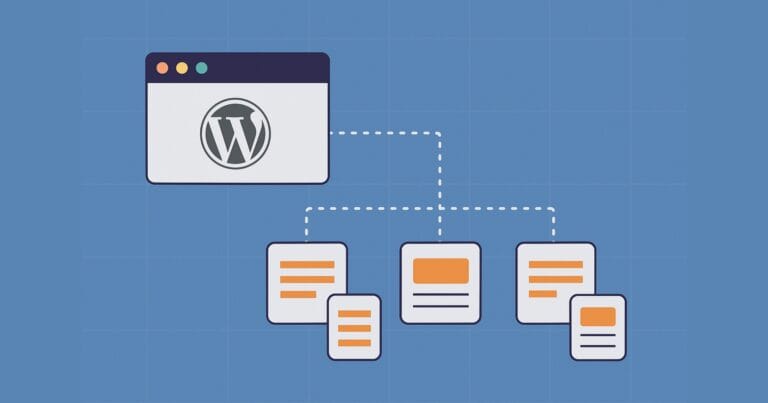
Of course, if you want to spend the time making this a little more feature-full, you could implement your own systems. BarCampMelbourne uses Mailman and Wordpress, plus the BuddyPress plugin for WordPress.
So now you have your home on the Internet, encourage people to sign up to the announcement list. This will give you an idea of how many people want to come.
Seek Help!
I’ll be honest with you. If this is the first unconference you’ve run, you’ll probably do most of the work yourself. I’d love for you to prove me wrong, and perhaps the conference model is now well enough understood that others will jump at the chance to help, but be prepared to run the show by yourself at first. But hang in there—it is feasible, I’m living proof and still doing it, so it must be worthwhile!
Find a Venue
You’ll still need to make some assumptions about turnout, so when looking for a venue, find a place that can easily scale from 10 to 50 participants. Good places to approach include:
- Camps (the types you went to for school or summer camps). These are particularly suitable as they solve the accommodation issue and typically have a lot of space. Plan to go out of school holiday season.
- Offices. Find a company that shares the interest of the unconference’s topic and see if it’s willing to open its doors for a weekend. It’s unlikely that it will let you stay overnight, as it probably will be without contents and liability insurance, as well as needing staff to be available out of hours. Perhaps try your own boss—an insider has a much better chance of making this happen.
- Community and city halls. Most local councils will have a list of halls that you can book through them that are available at competitive prices. You might even be able to access them for free if it’s for a community, not-for-profit event.
If your venue lacks overnight accommodation for participants, consider finding a nearby caravan park or youth hostel that you can book en masse. This will keep participants together for the duration of the event and allow discussions to continue late into the night.
Make sure that whichever venue you select offers public liability insurance, so there’s one less important item to worry about.
Find Sponsors
Once you have your general topic, web presence, mailing lists, venue, and a rough idea of attendance, you can work out how much this event is going to cost. Remember you also have to feed the masses, and the type of catering you choose will affect the cost. You can easily assume that a two-day event with four meals (lunch, dinner, breakfast, and lunch again) will cost US$50 per head to cater for.
Take this magic total cost and divide it by about $400. This figure is how many sponsors you need.
Why $400? If you can entice one company to sponsor the whole deal, that would be great, but it could also bias the conference towards the sponsor’s stipulations. Ask for too little and you’ll need to find dozens of sponsors.
In my experience, you’ll often find enough sponsors willing to provide $100 to $500, and 10 of those have covered our costs.
Of course you still have to make it worthwhile to the sponsor. Most will happily hand over their cash and ask for little in return; they see the value of supporting the community, but it’s only fair that they receive a reward in return for their support.
Design some sponsorship plans with value increasing in line with cost. For example:
$100 package:
- your logo on our web site
$250 package:
- your logo on our web site
- ability to distribute goodies at the event
- named and thanked at the event
$500 package:
- your logo on our web site
- ability to distribute goodies at the event
- named and thanked at the event
- ability to put up posters/placards/poster-boards promoting your organization
It’s important to be specific, to avoid confusion or resentment later on. Keep the sponsors happy, and they’ll be back next time.